Leave behind a garden
What is culture but forbearance?

On my morning walk to work, I pass a small, shabby house that once belonged to an old woman.
She was very tiny, under 5 feet tall and hunched over at a 45-degree angle, but she worked in her garden every day and walked in the neighborhood with two dirty, unleashed white terriers always trotting behind her.
For over a year, she tamed her backyard into a little garden of her own making. She did everything herself. It was scrappy. She found odd bits of wire and bamboo to hold up plants. She heroically fought back a thicket of invasive shrubs to let the native vines and bushes come back. She loved a shiny lawn ornament (or six) and made tiny paths with wood chips in a makeshift spiral. She planted scrawny seedlings given to her (or foraged) rather than any robust new perennials from Lowe’s.
It wasn’t the most beautiful garden I’ve ever seen, but it was one of the most loved. I saw her almost every morning for over a year, and I regret that I never learned her name.
Now the house and garden look abandoned. The weeds, once carefully removed, are taking over. The structure of the spiral in the center of the backyard is still visible but only if you know to look for it. I’ve seen no sign of her, and I fear she either died or moved.
But I had a cheering thought as I walked past her backyard last week: Look at how much she loved and cared for. Look at all of these plants that will live on in her absence, that will daily speak of her tenderness for them in their continued life without her.
Maybe this is one reason why we garden, why we tend the earth: If anything, it’s a grand gesture of hopefulness, a message left for the future.
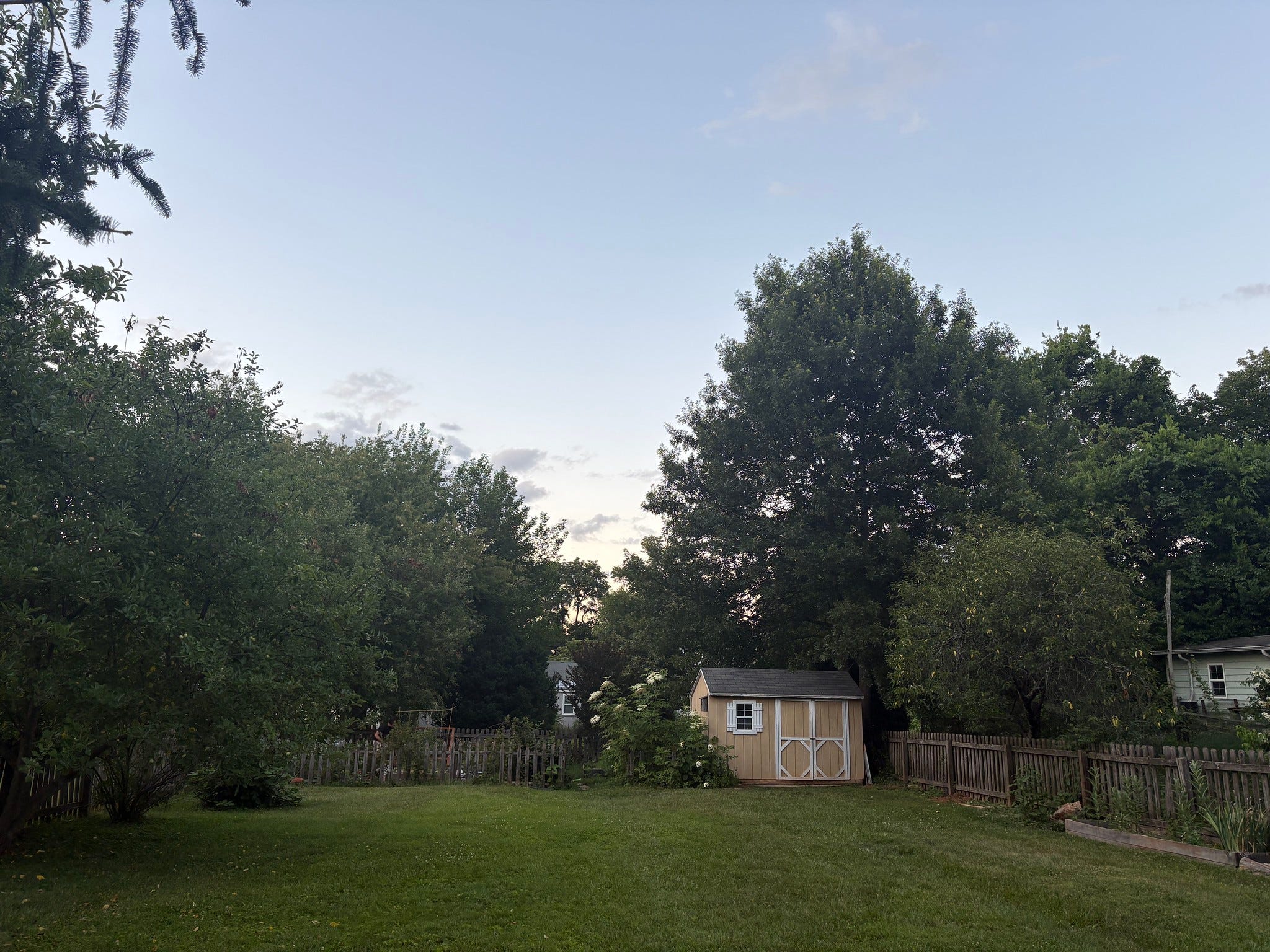
I thought about this old woman while recently reading Mirabel Osler’s A Gentle Plea for Chaos, a fittingly ramshackle book about British gardening habits. Osler writes about her “compulsion for trees,” describing the hundreds of saplings she and her husband planted on their property, knowing full well they wouldn’t live to see them in maturity. She plants them anyway.
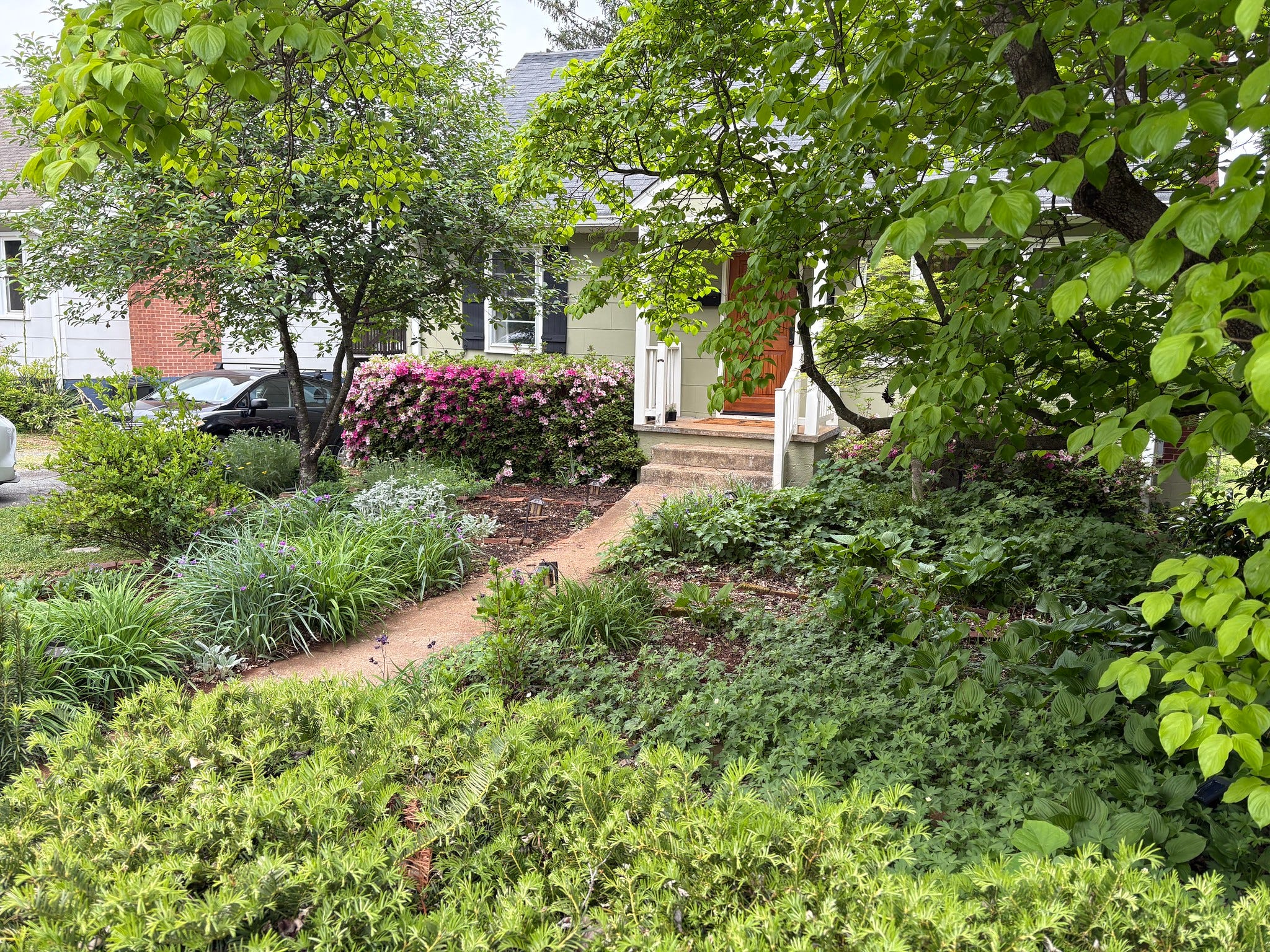
There is this sense of building a culture as we garden (indeed, the root of cultivating). Michael Pollan writes about this well in Second Nature:
“What sets us apart from other species is culture, and what is culture but forbearance? Conscience, ethical choice, memory, discrimination: it is these very human and decidedly unecological faculties that offer the planet its last best hope. It is true that, historically, we’ve concentrated on exercising these faculties in the human rather than the natural estate, but that doesn’t mean that they cannot be exercised there. Indeed, this is the work that now needs to be done: to bring more culture to our conduct in nature, not less.”
Gardening has always felt like this form of hopefulness to me: to build the kingdom, plant by plant.
Vibe check
Or, observations from the threatening heat of July
Highly recommend a day date with your lover. Pay a babysitter and spend 9–5 together somewhere close to home. We went to the capital, visited an art museum, had a long lunch, capped it off with a 3 p.m. cocktail. Perfect day.
I’d forgotten how delightful it is to gainfully employ your 2-year-old in housework. Lucinda has a fully functional tiny mop and is actually helpful in cleaning up the floor when I ask.
Do I want to dress like a tradwife still? It feels inappropriate at 38 to dress like this, from a profusion of old Christy Dawn dresses. The boho moment seems to have passed, seems now only for very rich women living on aspirational communes in the Bay Area. Do I have to get rid of this repertory of floral dresses and start wearing more black and menswear? My heart is torn. My desperate hair makes me think I can’t pull off anything that serious and structured.
When my brain is quiet for a moment, I think about: my Canadian anemone, all crisped up by the drought; toenails; the last drops of a perfect and mournfully discontinued floor cleaner; Iris Murdoch’s assertion that a middle-aged woman flirting is far more dangerous than a young woman; Guion’s hair; cherries in a porcelain bowl from Chinatown; a long linen nightgown; Felix’s memory-foam–like little body.
Currently reading
Brawler: Stories, Lauren Groff
My Year in Paris with Gertrude Stein, Deborah Levy
Dreaming by the Book, Elaine Scarry
I dearly hope I get to read what you write for many more years of my life.
Thank you for these beautiful thoughts. What an enchanting use of language and sweet window into your thoughts.