The slow mind needs a notebook
And the neglected body needs an accomplice

I envy the fast processors, like my husband, for whom everything, even from the depths, can be rapidly brought to the surface: emotions, language, art, humor, imagination.
I have a slow winch. It takes me five times as long as Guion to dredge up what’s inside: what I really think, what I feel (if anything at all). I know my slowness—which can often look like secretiveness—is frustrating. To him, to those with a quick intelligence, I appear plodding, if not withholding.
As I have written, I am slow because written—not spoken—words are my method of translation. Ever since I could form letters, writing things down has been my way of figuring out who I am or what’s on the inside. And writing takes a long time. It requires solitude and privacy and repetition and reflection. It is tedious. It often takes me days to sort things out with written words. And it’s the only way I know.
It’s not exactly a strength. I wish I were faster; I wish I could figure things out in real time with my voice. I wish, particularly, that I had the kind of intelligence that could lock ideas into an airtight worldview in an instant, with a torrent of wit, always at the ready. Try as I might, I do not, I cannot.
This was always a pitfall for me as a debater. I wasn’t quick on the draw. I had to take furious notes in the round to figure out what to say, which argument to make next. Only by writing things down, by hand, was I able to form a response. I would be able to make my statements sound persuasive, but I marveled at my opponents who were able to form devastating counterpoints in an instant and deliver them with speed and persuasion.
I could do persuasion—but not speed.
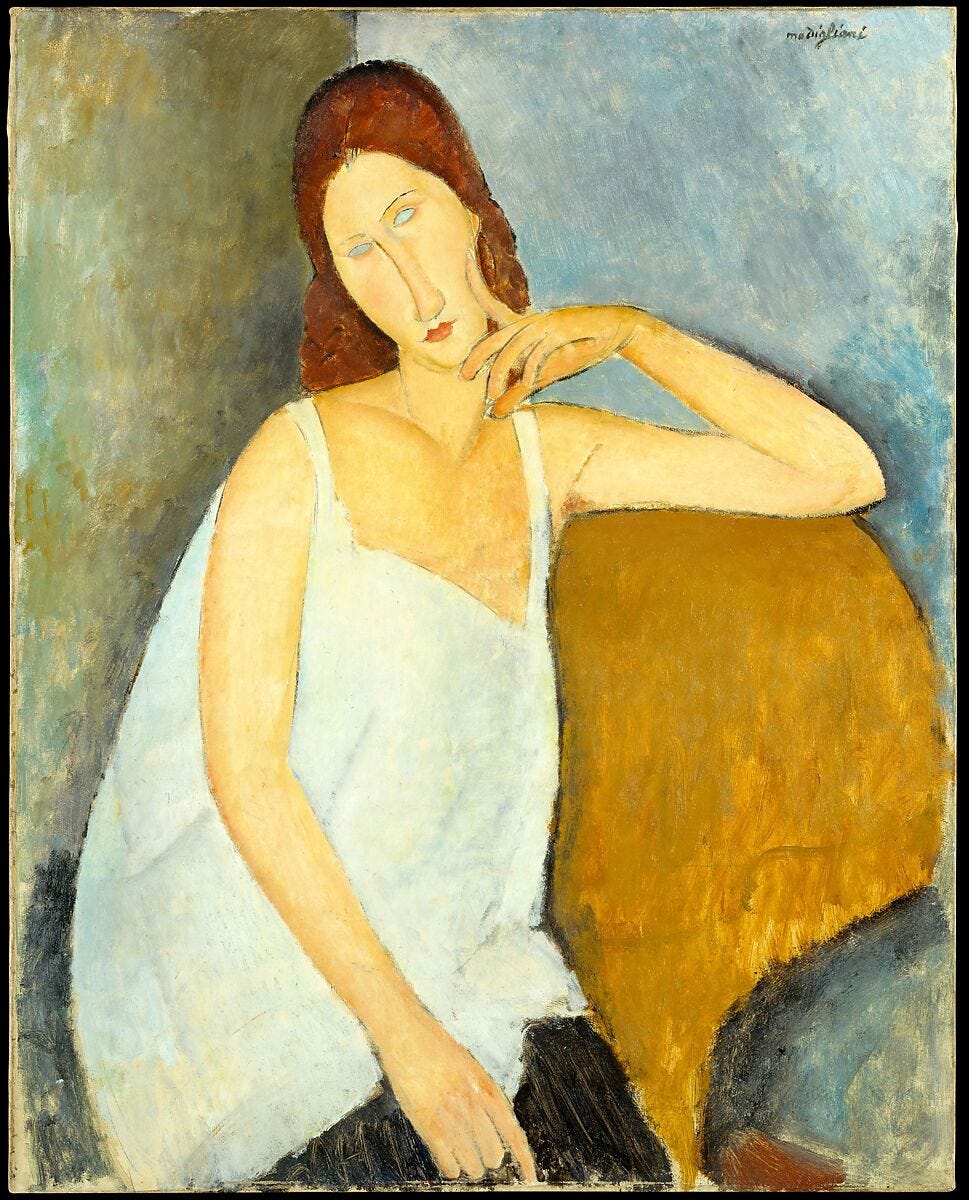
I’ve been casually reading the archives of the Paris Review interviews with the greats. (This week: Rita Dove, John Cheever, Joan Didion, Anne Carson.)
A common factor among all of these magnificent writers is that they feel like conduits, no matter their medium. What flows through them is often surprising, is often difficult to speak of clearly. But it’s the writing it down, committing words to paper, that counts.
In her 2006 interview (the first Art of Nonfiction), Didion says:
“… you get the sense that it’s possible simply to go through life noticing things and writing them down and that this is OK, it’s worth doing. That the seemingly insignificant things that most of us spend our days noticing are really significant, have meaning, and tell us something.”
How comforting! If nothing else, I read this remark from the inimitable Saint Joan as confirmation that all this tedious note-taking might be worth it. All of this insignificant recording and diary-keeping may not make me any faster. But it may all add up to something in the end.
At least this old bag of bones has a Moleskine
Thus prone to live inside my head, I have a tendency to think of my body as an accessory. It’s a thing that I lug around, which is not exactly me, even as it’s attached. It’s a jumble of bones and organs holding my real self, right?
Turns out this is false. Turns out everything is inseparable; the body and the mind are one. This will never fail to feel like a wild realization to me, no matter how many times you tell me.
It’s taken me a while to figure out (i.e., a good deal of slow writing) that this unfamiliarity with my body was why I ultimately chose to give birth at home.

I wanted to know that I could do it, that my body was capable of such a feat, without de rigueur medical intervention.
Aside from dying, I don’t think I’ll ever do anything that will rival giving birth in its intensity and overwhelming pull into my body and out of my mind.
That orphic interplay, which is so often unnoticed in my ordinary life, was very present to me in childbirth: the mind and the body working together, or even working in opposition, to bring about a significant event.
When I look back on those three births, I can remember what felt like a dialogue between my mind and body—like a drama that was playing itself out between two leading actors. I often felt like a spectator, even as I was apparently the one doing all the labor.
I felt like a victim of my body’s machinations in Moses’s birth. I also felt like my mind failed me, that it wasn’t strong enough to conquer that obliterating pain.
But by the time the third baby rolled around, swift Lucinda, I witnessed an entirely different drama unfold.

Labor was slow at first, and I felt imperturbably calm and conscious of how my mind was guiding my body. For the long hours leading up to her (ultimately fast) arrival, I felt, for perhaps the first time, a true union between mind and body. They were working together, as I willed myself to breathe in a rhythmic pattern that nearly eliminated the pain. It was so strange and redemptive and downright mystical.
The real challenge is how to access even a morsel of this interplay in my ordinary life, now that my birthing days are behind me.
Movements as elemental as walking, lugging babies around on my hips, and kneeling in the soil feel restorative. These simple actions ground me (even more so if I’m in minimal shoes or no shoes at all, let me tell you, as I probably have).
Walking and note-taking in Vienna brought both of these bodily practices into a fine union.
We walked miles every day and always had our notebooks and pens close at hand. At the encouragement of our guide, Professor William Tate, we took notes everywhere, made sketches, jotted down questions. We processed everything by hand.
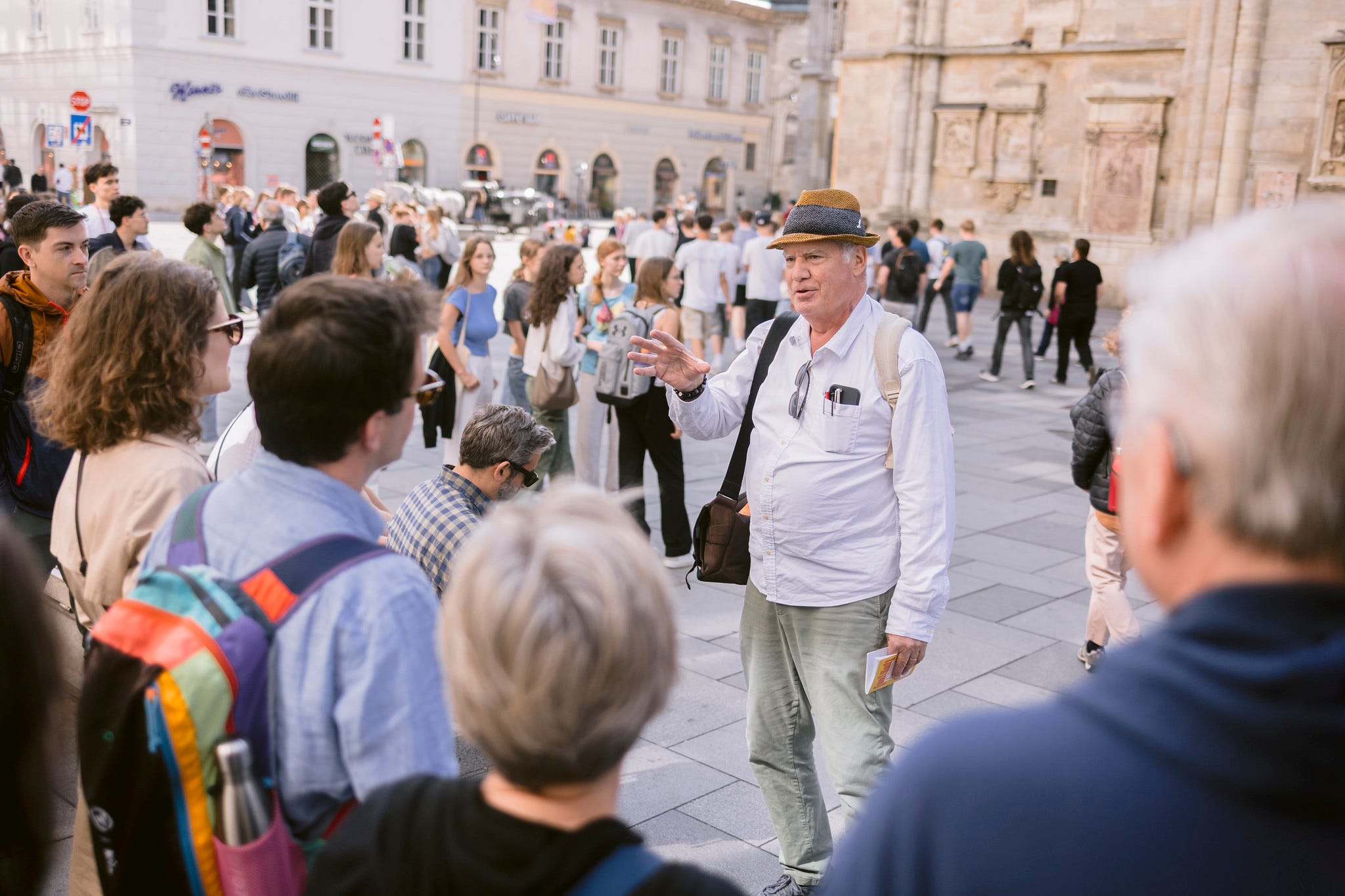
Early in the trip, he took us on a pilgrimage to his favorite Boesner store, which is, as my Berlin-dwelling sister snarkily pointed out, essentially the German version of a Michael’s. (Reader, it is similar, but 50x higher quality.) He wanted us to spend time carefully selecting pens and notebooks that spoke to us, that warmed to our hands, that fit neatly on our persons. This selection of handwriting tools was a vital component of our ability to experience the city.

I’ve always had several notebooks floating around, but since coming back from Vienna, I’ve renewed my commitment to writing by hand. Thinking in the notebook has now become an almost nightly practice. And although I am still intellectually sluggish, this ritual restores some daily union between my slow mind and my live body.
Currently reading
Lost Illusions, Honoré de Balzac
The Invention of Design, Maggie Gram
The Extinction of Experience, Christine Rosen
This is a beautiful piece, Abby. Beautiful, and reassuring to my own slow mind (I often struggle to articulate what I have not previously written, much to my chagrin in many a face to face conversation, and because of this the notebook is my most intimate companion). I cannot often think easily with my voice, and it has taken me many years to make peace with this aspect of myself. And I have also found myself seeking "edge" experiences for the sake of feeling myself a body, since I too have spent much of my life feeling my body an accessory my mind might pick up or put down at will.